
Fixers on the Frontline: How Biomedical Engineers Keep Health Care Alive
Health care workers are only as effective as the equipment they rely on.
Yet in low- and middle-income countries, functional medical equipment is scarce—as are personnel trained to repair and maintain such equipment. Addressing these shortages is not just critical but also a wise investment:
“The single most cost-effective action that you can take in a hospital,” according to Catherine Mohr, President of the Intuitive Foundation, “is to invest in your biomedical engineers—everything gets better when you do.”
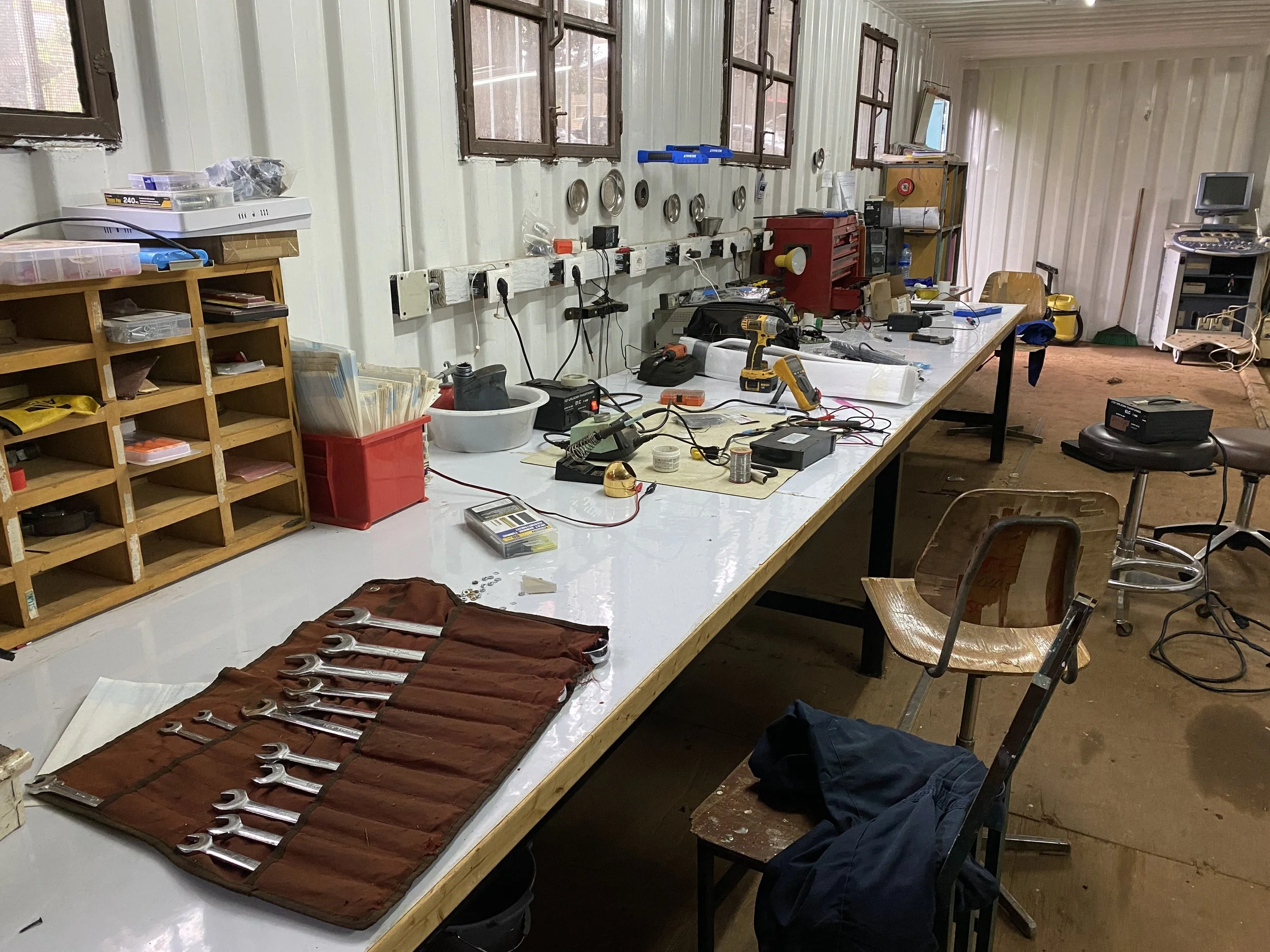
A biomedical engineers bench Soddo, Ethiopia
The Problem: Faulty Equipment and Nobody to Fix it
Health facilities in low-resource settings often depend on medical equipment manufactured in and donated by the wealthiest economies in the world.
Research published in the British Medical Journal of Global Health found that although as much as 70 percent of medical equipment in sub-Saharan Africa is donated, only 10 to 30 percent ever becomes operational.The same study reports that donors frequently send broken or incomplete equipment and that most biomedical engineers lack enough training to maintain what they receive.
This problem is compounded by the fact that medical equipment is not designed with a second life in mind. While new equipment is backed by the manufacturer, donated equipment is not—leaving local engineers to fill the gap. As Catherine Mohr explains:
“In the secondary medical device economy, where a lot of the equipment is either donated or purchased second-hand, it doesn’t come with servicing support or even a repair manual. So users have got to figure out how to service it themselves.”
Making sure biomedical engineers have the right skills for these realities is essential. Yet in many countries this professional field is still emerging, and university programs offer strong theory but little of the hands-on training needed to keep equipment working.
This results in what a paper published in the Health and Technology Journal damningly describes as “graveyards of medical technology.”
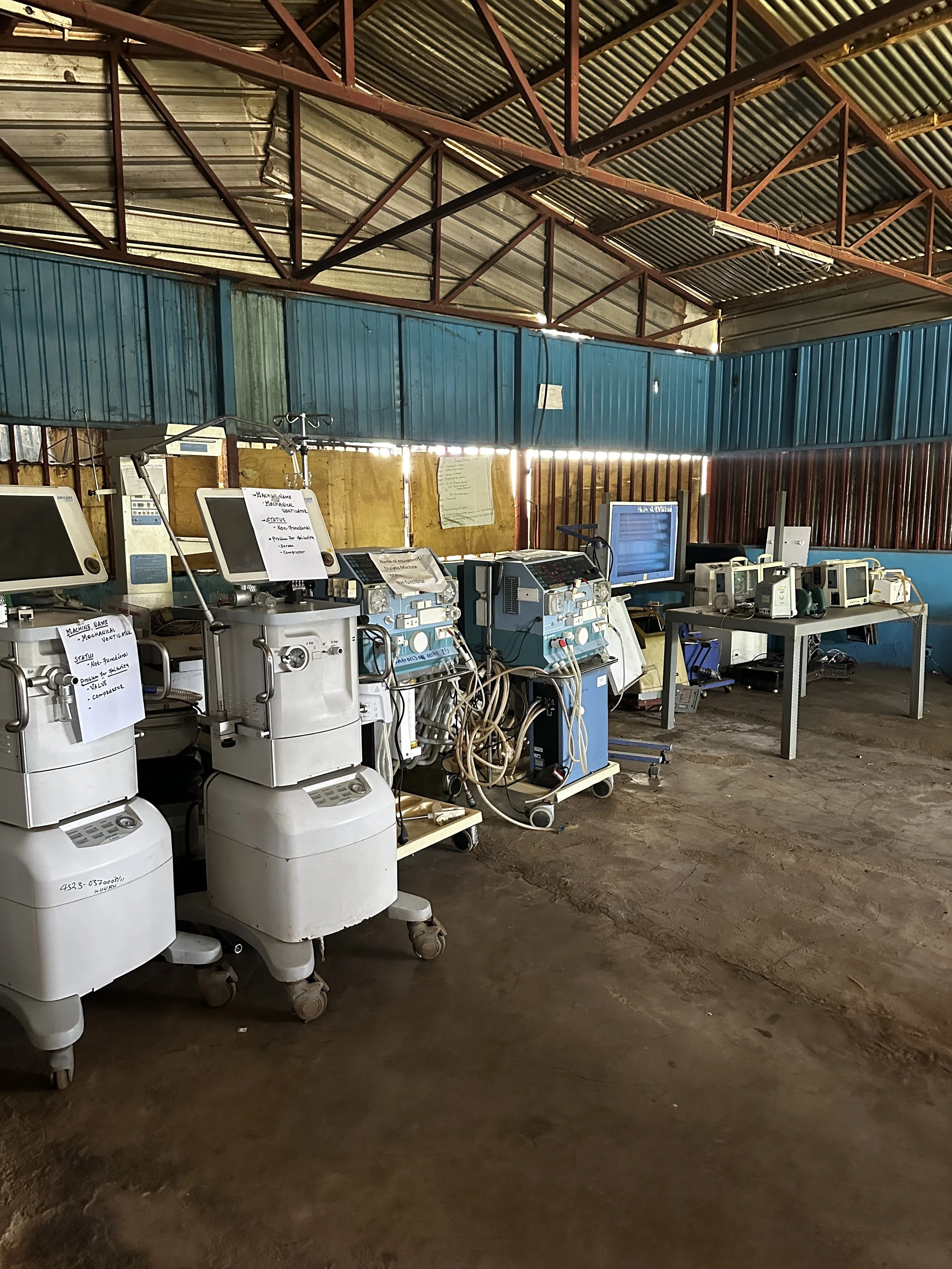
Where anesthesia machines, ventilators, and patient monitors get stripped for parts. Wolayta Hospital in Soddo, Ethiopia
SELF’s Partnerships
In response to these issues, SELF is working alongside In response to these issues, SELF is working alongside Engineers Without Borders USA (EWB-USA) to develop practical training solutions that help biomedical engineers strengthen the hospitals they serve. This work builds on SELF’s commitment to a training approach whereby health workers can teach themselves new skills and swiftly place them into practice.
To bring this training approach to biomedical engineering, EWB-USA is creating free, online modules that teach practical repair and maintenance skills. This effort also includes open access to key device documentation and a community of practice connecting technicians who sustain hospital equipment worldwide.
EWB-USA has long focused on civil engineering projects such as water, sanitation, and energy. Recently, in collaboration with SELF, it has expanded on this work to strengthen health systems through scalable biomedical training. As Melissa Montgomery, Chief Programs Officer, notes, “the same communities that struggle with basic infrastructure often lack functioning equipment in their hospitals as well.”
Megan Lavery, another engineer at EWB-USA, regularly works with engineers in low- and middle-income countries to increase their biomedical knowledge, as well as with hospital administrators to highlight the benefits of having trained biomedical engineers on site. In her words:
“Most administrators quickly realize that having a trained biomedical technician on site, allows lots of equipment to be restored to working order. This means better care for patients, as well as costs-savings and additional revenue that can be used for other needs.”
In hospital after hospital, Megan has watched equipment return to life after simple fixes are made—a fuse replaced, a loose connector tightened. These are the kinds of routine troubleshooting that cannot happen without a trained technician on staff.
However, lots of equipment, says Megan, “is meant to be repaired by the manufacturer's technicians, typically using special tools.” As a consequence, health care workers are routinely forced to improvise—for example, by retrofitting medical instruments in creative ways, or reusing single use equipment.
Insights from Medical Aid International , which has worked with SELF for several years, reinforce this picture. Its founder, Tim Beacon, has seen hospitals flooded with equipment that breaks quickly or cannot be serviced in-country. His message is consistent: equipment must be appropriate to its environment—otherwise it risks becoming another burden for technicians to manage.
Technicians who work with these machines every day are the people who ultimately determine whether they stay in service. Practical training strengthens their confidence and judgment.
As one engineer who participated in Medical Aid International’s own training program explained, “my communication skills have improved because I have gotten a deeper understanding of how the machine works… When I meet the doctors and nurses, I am able to confidently explain what’s going on with the machine.”
Digitized, Scalable Solutions
Biomedical engineers do not often appear in global health headlines, but their work is the quiet hinge on which much of modern medicine swings. When a device functions as intended, it is because someone with the right skills kept it alive. And in hospitals where equipment is scarce, that work becomes all the more consequential.
The effort now underway—building practical training, opening access to documentation, connecting technicians across borders—will not transform health systems overnight. But it shifts the center of gravity in the right direction: toward the people on the ground who make health care possible.
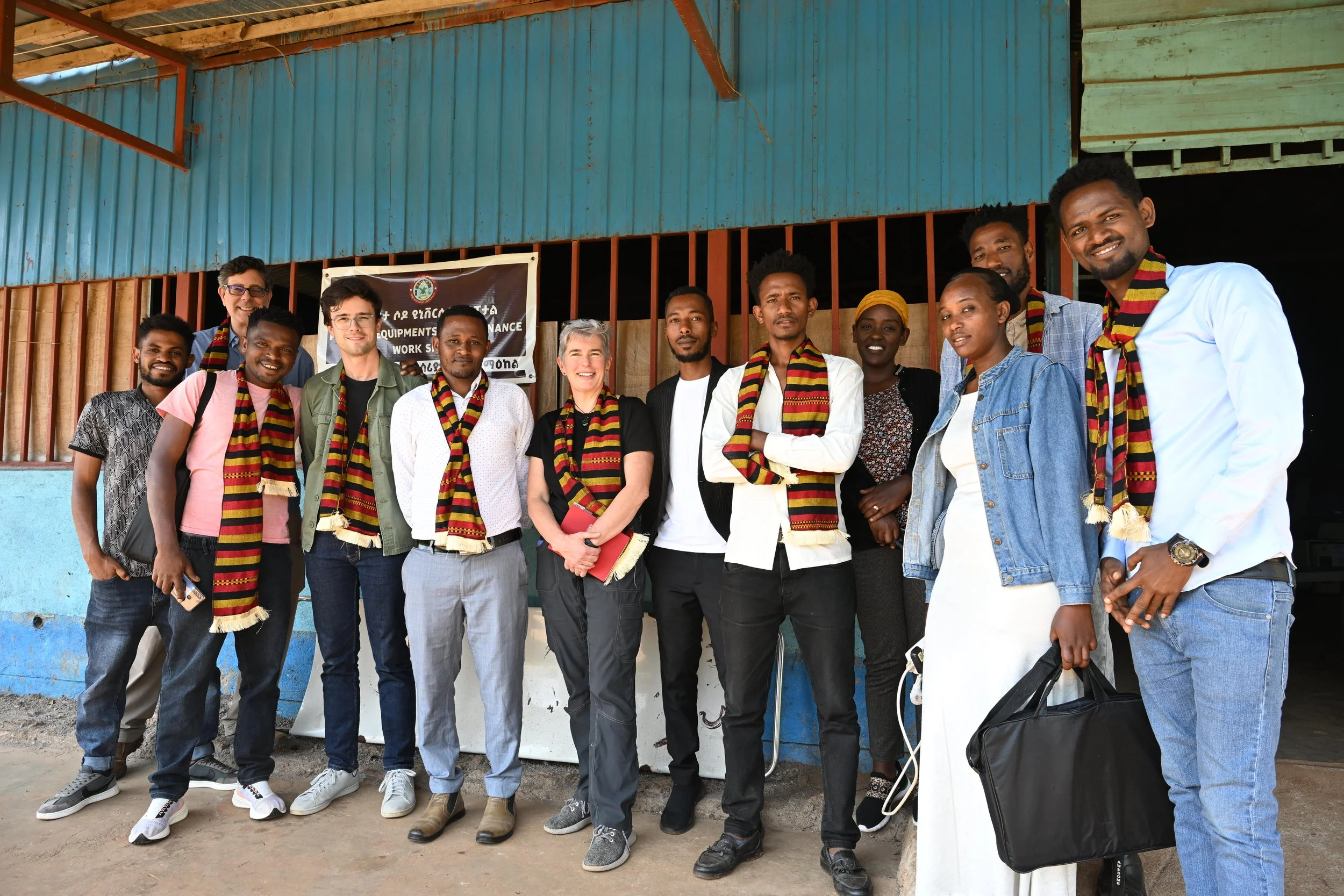
Biomedical engineers trained through Medical Aid International’s training program. Wolayta Hospital in Soddo, Ethiopia 2023
