
Assessment, Assessment, Assessment: A Recap of SELF’s Activities at the 2026 WACS Annual Conference
“For me, it was the icing on the cake,” says Prof. Emmanuel Ameh, reflecting on SELF’s recent activities at the Annual Conference of the West African College of Surgeons (WACS), in Accra, Ghana. The icing, as Prof. Ameh puts it, is the news that WACS has formally engaged SELF to support the College in strengthening its examination and assessment framework moving forward.
WACS faculty members attended a two-day Assessment Workshop exploring how the SELF program, in particular its e-learning tools and self-administered skills assessment methods, can complement the College’s approach to examination. A pediatric working group drawn from WACS and COSECSA convened in Accra to begin this work.
WACS Assessment Workshop
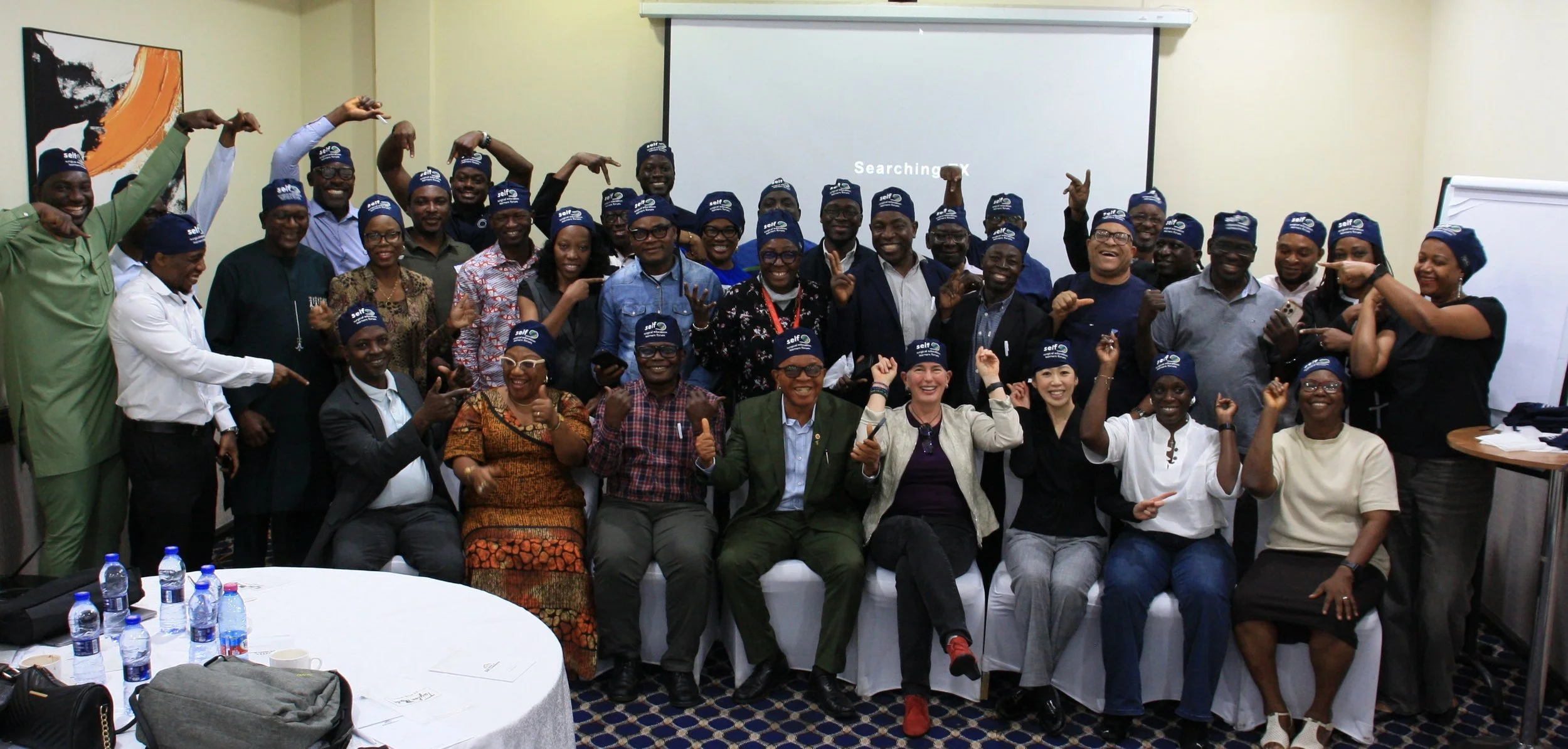
Workshop Participants in Accra
The Assessment Workshop brought together faculty responsible for examinations and assessment across the College. WACS faculties are eager to incorporate e-learning into their curricula, with some having already experimented successfully, with virtual teaching formats (such as webinars) during the COVID-19 pandemic.
E-learning tools have the potential to overcome some of the limitations of traditional, in-person assessment formats, including time, geography, and limited examiner availability. Their effectiveness in low-resource settings, in particular, is increasingly well-documented — as evidenced for example by this report from members of the Royal College of Surgeons in Ireland (RCSI) and other institutions. “To expand quality surgical training in low-resource settings,” the authors assert, “the opportunity that technology presents must be grasped.”
Against this background, the SELF team introduced two e-learning tools at the Assessment Workshop: ENTRUST and the Peer Review App. While they serve distinct purposes, the tools are mutually reinforcing.
“If WACS is the primary surgeon,” says Catherine, President of the Intuitive Foundation, “we’re the assistant handing new tools into their hands. We have a whole lot of tools that they’ve never worked with before — we're teaching them how to use those tools and how they can harness them to realize their goals.”
ENTRUST
ENTRUST is a free, case-based virtual patient simulation platform designed to teach and assess clinical judgment and decision-making. During a simulated procedure, a routine case might suddenly become more complex — for example because of unexpected bleeding, respiratory distress, or destabilized vitals — requiring the learner to adapt and respond in real time. By introducing complications and variables into clinical procedures, the platform develops learners’ competence, confidence, and adaptive thinking.
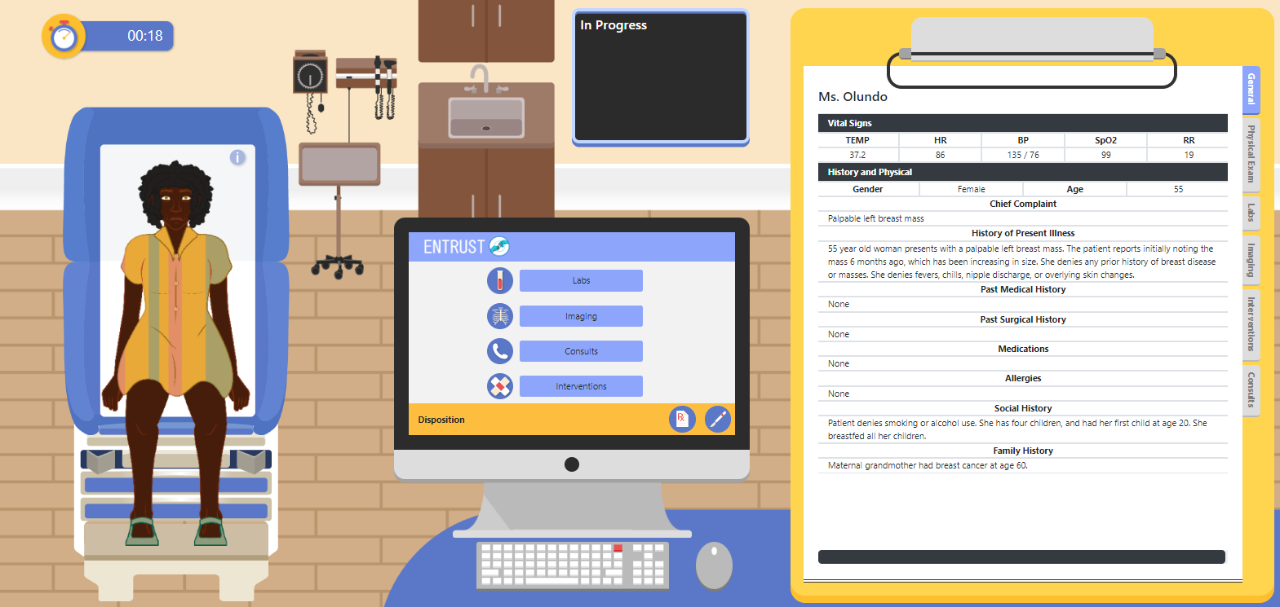
Example of a Case Scenario in ENTRUST (Source: Stanford Medicine)
ENTRUST has been used by the College of Surgeons of East, Central and Southern Africa (COSECSA) since November 2021, when it was piloted as part of the College’s membership examination. Feedback was promising: 92% of examinees subsequently expressed a desire to use ENTRUST as a learning platform, and Professor Abebe Bekele, Chair of COSECSA’s Examinations and Credentials Committee, reportedly saw great utility in the platform.
SELF’s Clinical Program Manager, Dr. Fabrice Sodogas, explains that ENTRUST “teaches you not just when, but also when not to undertake a procedure, thereby helping to prevent the acquisition of so-called “anti-skills” and bad habits.”
Catherine echoes Fabrice’s appraisal:
“SELF has been very focused on teaching and scaling psychomotor skills training; however, we recognized that teaching people how to do a procedure, but not when and when not to do it, isn’t very responsible. That’s why we started to build clinical judgment training capability into our skills modules through ENTRUST.”
Peer Review App
The Peer Review App is available to download from the Google Play Store for Android and it allows learners to record themselves performing a procedure on a simulator and then upload the footage for review. Experienced practitioners can watch the recording through the app and provide both feedback and a mark. Learners can also self-assess against established marking criteria.
Crucially, the app makes it possible to receive expert feedback even when a supervisor is not physically present — a significant benefit in low-resource settings, where specialist clinicians are typically in short supply and overstretched.
Emerging Shift: From the Individual to the Institutional
SELF’s e-learning tools and self-administered skills assessment methods were very well received — so much so that WACS would now like to work together to embed psychomotor skills modules within the College’s assessment framework. The fact that WACS, the key professional body directing surgical and procedural medicine across a fast-growing region of West Africa, wants to move forward in this way attests to the high degree of trust and belief the College has in what SELF offers.
“This is a really big step,” says Catherine. “Assessment is the means by which a college determines who should be a member — it is therefore at the core of a college’s identity.”
Prof. Ameh, chief consultant pediatric surgeon in the Department of Surgery at National Hospital in Abuja, Nigeria, puts it plainly:
“The lives of the faculty chairs revolve around assessment and creating exams. They have always faced difficulties with how best to do this. The tools that SELF has can empower them to turn their strategy and vision into a reality.”
The evidence supports institutional consideration of the SELF model. A study led by Dr. Abdourahmane Ndong — assistant professor of surgery at Gaston Berger University in Senegal and a general and laparoscopic surgeon at Saint-Louis Regional Hospital in Senegal — demonstrated measurable skill acquisition through SELF laparoscopic modules prior to clinical transition. Another recent study, led by Dr. Blessing Ngam of the Mbingo Baptist Hospital in Cameroon, compared SELF-based laparoscopic training with traditional pathways and supported structured simulation as an effective and safe method of building competency.
Moving forward, SELF and WACS plan to hold regular meetings, working faculty by faculty and concentrating on modules in line with priorities identified by the faculties themselves. As described below, that process is already underway, beginning with the pediatric surgery group. Efforts will be directed to improving both formative assessment — the ongoing feedback residents receive as they progress through their training — and summative assessment, the graded examination process that residents go through at the end of their education to certify competence and determine eligibility for membership and, later on, fellowship.
Pan-African Pediatric Surgery E-learning Program
At the Accra meeting, a working group led by Professor Emmanuel Ameh and comprising surgeons from WACS and COSECSA focused on integrating SELF modules within a platform that the group is already using: the Pan-African Paediatric Surgery Education Programme (PAPSEP).
PAPSEP is an e-learning platform built by the RCSI Institute of Global Surgery and hosted on the United Nations Global Surgery Learning Hub. It contains bespoke teaching resources mapped to the curricula of both WACS and COSECSA, who are partnering with organizations including Smile Train and Kids Operating Room.
Since PAPSEP focuses on knowledge acquisition, SELF is well placed to complement and strengthen the program through psychomotor skills training. According to Fabrice:
“If the pediatricians can embed SELF’s psychomotor skills training modules and the in-built virtual clinical scenarios from ENTRUST, PAPSEP is going to be more complete and robust.”
In this way, as Catherine puts it, “SELF is stitching around the edges of existing efforts.”
Pioneered by the pediatric group, PAPSEP has the potential to serve as a foundation on which other faculties can build in future.
Looking to the Future
This is only the first step in what promises to be a long but exciting journey. In the future, says Fabrice, “the overarching, long-term goal in shifting from individuals to faculties is the dream of one day harmonizing the curriculum across all Africa.” Professor Jiburum, Professor of Surgery and Consultant Plastic Surgeon at the Imo State University Teaching Hospital, adds that “assessment is a critical part of achieving harmonization.”
